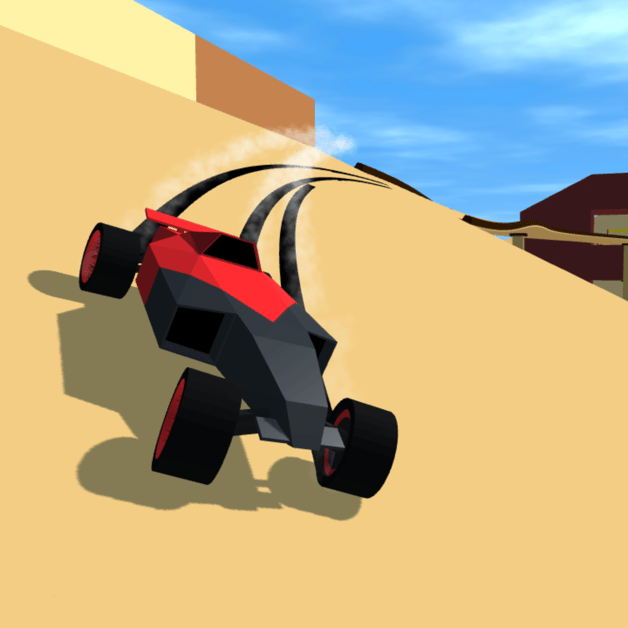
Polytrack Wall-Riding & Air-Braking: Advanced Physics Engine Mastery
Masterclass physics guide for Polytrack. Centrifugal wall-riding thresholds, air-braking pitch stabilization, and vector snapping.
FAQ
What is air-braking in Polytrack?
What is the minimum entry speed for 90-degree wall rides?
Deep Physics Engine Fundamentals
Polytrack calculates vehicle dynamics using a custom 3D rigid-body simulation that takes into account tire friction coefficients, rotational inertia, and surface normals:
Rotational Inertia + Tire Grip Vectors + Downforce Scaling = Dynamic Vehicle Telemetry1. Centrifugal Wall-Riding Mechanics
Vertical wall rides are not scripted animations—they are genuine physics interactions:
- Surface Normal Transition: Transition onto the vertical bank without abrupt steering angle changes.
- Apex Altitude Maintenance: Hold the upper third line along the curve to maximize exit speed as analyzed in Official Track 04 Guide.
- Gravity Dive Vector: As the wall levels out, steer slightly downward to convert vertical potential energy into forward kinetic acceleration.
Review foundational inputs in our Beginner Racing & Controls guide.
2. Air-Braking & Flight Trajectory Control
When launching off giant ramps, over-jumping the landing zone kills lap times:
- The Problem: Excessive airtime keeps tires off the ground where you cannot accelerate or steer.
- The Solution (Air-Braking): Tap
S(Brake/Reverse) while mid-air. This arrests the vehicle’s angular pitch-up moment, forcing the nose down and pulling the car toward the asphalt faster. - Air Roll Leveling: Tap
AorDto match the camber of the landing slope as detailed in Drifting and Advanced Physics.
3. Vector Snapping on Slope Touchdowns
Landing on inclined slopes often causes violent physics bounces:
- Pre-Align the Chassis: Rotate your vehicle in mid-air until the undercarriage matches the slope incline angle.
- Hit Full Throttle upon Touchdown: Immediate throttle application forces the physics engine to snap tire grip vectors to the track surface normal.
- Test your maneuvers on extreme tracks in the Extreme Stunt and Loop Track Codes collection!
Check out competitive lines in Shortcuts and Speedrun Tips and track building advice in the Track Editor Complete Guide.
Related Articles
guides
Polytrack Drifting & Advanced Physics: Momentum, Boosts & Air Control
Master advanced driving physics in Polytrack: Scandinavian flicks, air pitch control, surface friction, and boost pad chaining.
guides
Polytrack Beginner Racing Guide: Controls, Respawning & Ghost Cars
Master essential racing controls, checkpoint respawning, camera angles, and ghost car replays in Polytrack.
guides
Polytrack Track Editor Guide: Building Loops, Jumps & Exporting Codes
Complete guide to the Polytrack in-game Track Editor: placing road modules, banked turns, loops, checkpoint grids, and exporting codes.
Was this helpful?
Thanks for the feedback!